Royal Concert Hall, Nottingham | Theatre Review
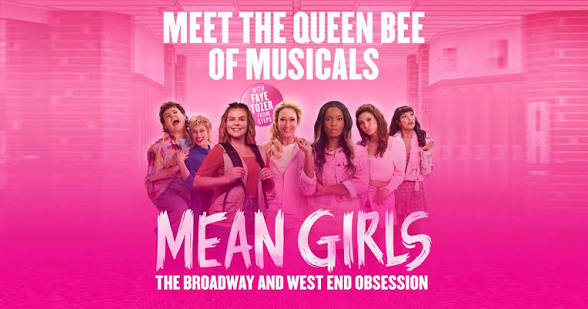
High school has long provided fertile ground for musical theatre, offering a microcosm of society in which popularity becomes currency, friendships are political alliances and the smallest social miscalculation can carry enormous consequences. Mean Girls, the musical adaptation of Tina Fey’s much-loved 2004 film, takes these familiar adolescent anxieties and wraps them in a brightly coloured world of sharp humour, social manoeuvring and teenage excess.
The story follows Cady Heron, played by Emily Lane, a previously homeschooled teenager whose introduction to American high school proves considerably more complicated than her upbringing in Africa might have prepared her for. She soon encounters the Plastics, a trio of socially dominant girls led by the formidable Regina George, whose influence over her peers is maintained through a carefully calculated mixture of admiration, intimidation and manipulation.
What follows is an entertaining examination of the desire to belong and the compromises people make in pursuit of acceptance. Cady’s gradual transformation from bewildered outsider to willing participant in the school’s ruthless social hierarchy provides the narrative with its central irony: in attempting to challenge the very behaviour she initially finds objectionable, she begins to reproduce it herself.
Tina Fey’s writing remains one of the show’s greatest strengths. Her understanding of teenage social dynamics allows the comedy to extend beyond superficial observations about popularity and appearance. Beneath the exaggerated characters and deliberately absurd situations lies a recognisable account of insecurity, conformity and the often complicated relationship between friendship and competition.
Vivian Panka is particularly effective as Regina George, capturing precisely the qualities that make her such a memorable antagonist. Her portrayal combines effortless self-assurance with calculated charm and casual cruelty, creating a character whose authority seems entirely natural within the peculiar social order of North Shore High. Panka understands that Regina’s power lies as much in her ability to command admiration as in her capacity for intimidation, finding the humour in her extraordinary sense of entitlement.
Equally deserving of recognition is Sophie Pourret as Karen Smith, whose comic characterisation provides a delightful counterpoint to Regina’s carefully calculated dominance. Karen’s apparent innocence and gloriously uncomplicated understanding of the world make her an essential part of the Plastics’ dynamic. Pourret embraces the character’s absurdity with an appealing sincerity, allowing the humour to emerge naturally rather than simply playing her as a caricature. Alongside Kiara Dario’s Gretchen Wieners, the trio captures the curious mixture of loyalty, insecurity and competition beneath their carefully maintained image of friendship.
One of the musical’s more interesting qualities is the way it examines the pressures placed upon young women to conform to expectations of appearance, behaviour and social status. Regina’s authority depends upon a system in which approval becomes a measure of personal worth, and the resulting rivalries reveal how readily insecurity can be disguised as confidence.
Musically, Jeff Richmond and Nell Benjamin provide a contemporary score that moves between energetic ensemble numbers and moments of personal reflection. The songs give the characters opportunities to express the anxieties and ambitions that drive their behaviour, while the larger musical sequences embrace the theatrical possibilities of the high school setting.
The humour is central to the show’s appeal. The familiar social divisions of the school cafeteria, the importance attached to clothing and appearance, and the extraordinary influence wielded by a handful of popular students are all treated with a knowing theatrical exaggeration. Yet the underlying observations remain recognisable well beyond the teenage years.
Perhaps the most interesting aspect of Mean Girls is its suggestion that cruelty is rarely confined to those we readily identify as villains. Cady’s journey demonstrates how easily good intentions can become compromised when acceptance and status are at stake. It is an observation that gives the story a degree of moral complexity beneath its deliberately exuberant presentation.
Ultimately, Mean Girls offers more than a nostalgic return to a familiar film. Its exploration of identity, insecurity and the pursuit of popularity remains relevant in a world increasingly shaped by social media, public judgement and carefully constructed identities.
Beneath the pink exterior, the sharp dialogue and the exaggerated teenage rivalries lies a simple but enduring idea: that genuine confidence comes not from securing the approval of others, but from discovering that it was never necessary in the first place.