 The Hallé’s return to Nottingham’s Royal Concert Hall offered exactly the kind of programme that shows why orchestral music continues to reward live performance. Liszt, Beethoven and Stravinsky may all be firmly established within the repertoire, but placed together they created an evening built around scale, contrast and transformation.
Under principal conductor Kahchun Wong, the orchestra opened with Liszt’s Les Préludes, a work that can sometimes feel more famous for its grand gestures than for the journey that leads to them. Here, though, it proved an effective opening statement. Liszt’s music constantly shifts between uncertainty, lyricism and triumph, and the Hallé brought a strong sense of momentum to those changes of mood.
It is music designed to make an impact, but its success depends on more than volume. The real interest comes from the way apparently modest ideas gradually gather weight and importance. By the time the work reaches its great climactic passages, the effect comes from everything that has been built before them rather than simply from orchestral force.
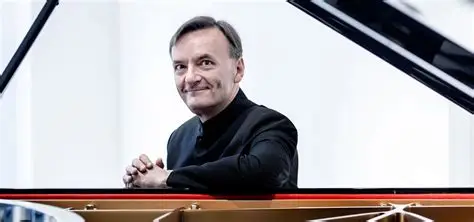
The centrepiece of the first half was Beethoven’s Piano Concerto No. 5, the Emperor, with Sir Stephen Hough as soloist.
The concerto remains one of Beethoven’s most immediately imposing works. It begins unusually, with the piano entering almost at once rather than waiting patiently for a long orchestral introduction. From the outset, the soloist is placed at the heart of the argument.
Hough is a musician with both formidable technique and a strong intellectual understanding of the repertoire, and the concerto gave him ample opportunity to show both. The first movement moves constantly between grandeur and more reflective passages, and the interest lies in that tension. Beethoven repeatedly sets the individual voice of the piano against the larger forces of the orchestra before bringing the two together again.
The slow movement provides the concerto’s emotional centre. After the scale of what has come before, Beethoven strips the music back and creates something remarkably still. It remains one of his most beautiful movements precisely because it never needs to overstate itself.
Its transition into the finale is equally remarkable. Rather than drawing a line beneath the slow movement, Beethoven allows the final movement to emerge directly from it, transforming stillness into energy almost before the listener realises what is happening.
That sense of transformation also provided a natural link to the work after the interval: Stravinsky’s The Firebird.
Even more than a century after its first appearance, The Firebird can sound astonishingly modern. Its brilliance lies partly in orchestration. Stravinsky treats the orchestra almost as a collection of colours, constantly combining instruments in different ways and allowing individual sounds to appear and disappear within the larger texture.
The music moves between mystery, violence and radiant beauty. There are moments of extraordinary delicacy followed by passages of almost overwhelming rhythmic energy, particularly in the famous Infernal Dance. Yet the work is never simply a display of orchestral fireworks. Beneath the colour sits a carefully shaped dramatic story.
That becomes clearest in the closing section. The final transformation of the music is gradual, beginning with remarkable simplicity before expanding into one of Stravinsky’s most powerful conclusions. It is a finale that depends upon patience. Its impact comes from the steady accumulation of sound rather than a sudden attempt at spectacle.
As a programme, the evening worked particularly well because the three pieces complemented one another without sounding remotely alike. Liszt offered Romantic sweep, Beethoven balanced heroism with intimacy, while Stravinsky opened up an entirely different world of rhythm and orchestral colour.
The Hallé remains one of Britain’s great orchestras, but evenings such as this are valuable precisely because reputation alone is not enough. Familiar music still has to feel alive in the moment.
This concert succeeded because the programme continually moved between the monumental and the intimate. It reminded us that the most famous works in the repertoire survive not because audiences are expected to admire them, but because, when heard live, they can still surprise.