I could write this review in two words. Absolutely phenomenal! However, you probably expect more detail so…
A breathtaking triumph of imagination, empathy and theatrical storytelling
There are productions that entertain, productions that move us, and then there are those rare theatrical experiences that fundamentally challenge the way we see the world. The Curious Incident of the Dog in the Night-Time, which opened at Nottingham’s Theatre Royal last night, belongs emphatically in that final category. Intelligent, exhilarating, frequently funny and profoundly affecting, this is theatre operating at its most inventive and emotionally powerful.
Adapted by Simon Stephens from Mark Haddon’s celebrated novel, the story begins with a seemingly straightforward mystery: a neighbour’s dog has been killed, and a teenager is determined to discover who is responsible. Yet the murder mystery is little more than the doorway into something considerably richer. What unfolds is an extraordinary exploration of truth, trust, family relationships and the exhausting business of navigating a world that so often refuses to make sense.
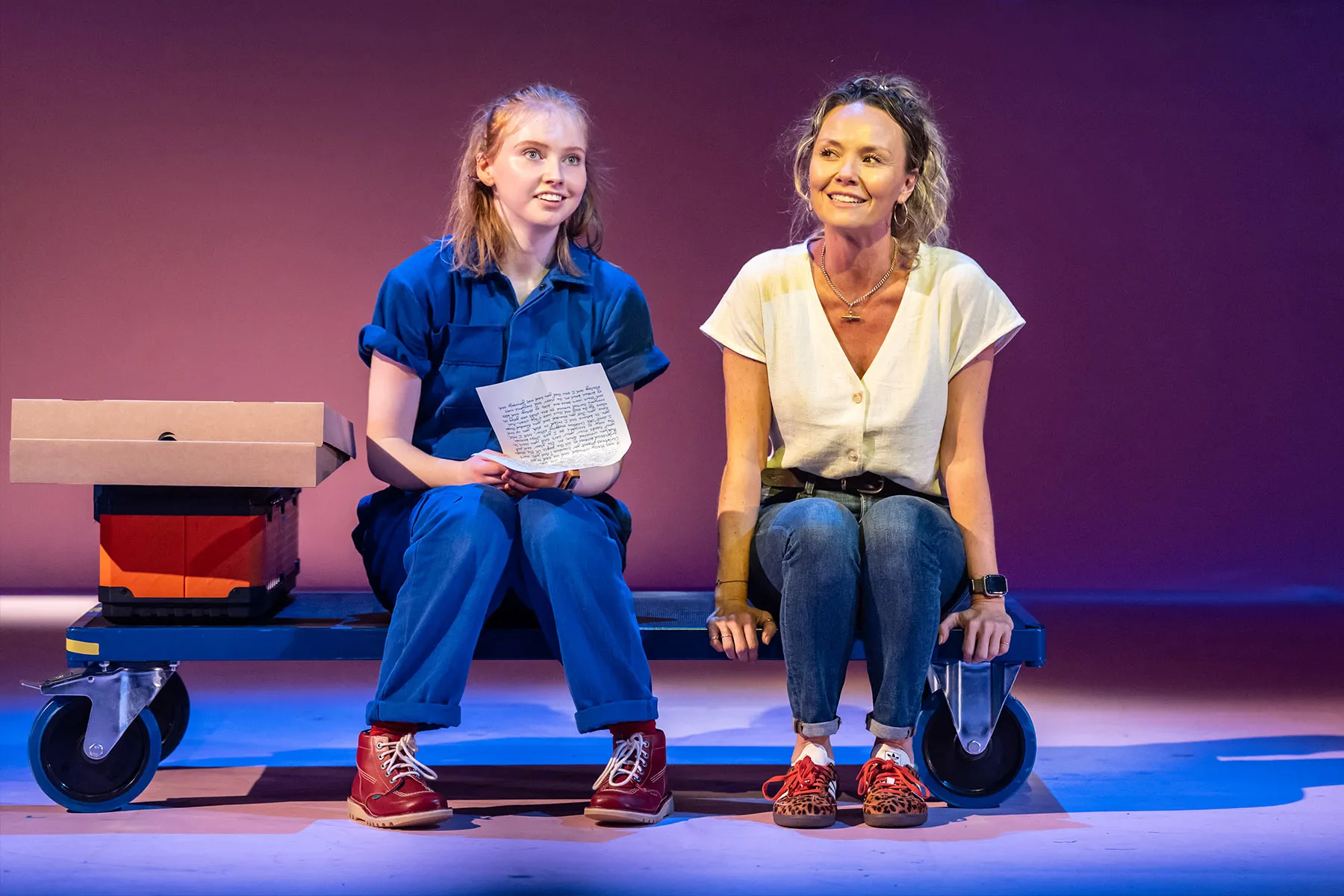
This new production, directed by Ned Bennett, makes the intriguing decision to reimagine the central character as a teenage girl, Chris Boone. It is a change that could easily have felt cosmetic, but instead offers an opportunity to approach a familiar character from a fresh perspective without sacrificing the essential qualities that make the story so compelling.
Alex Keenan is absolutely outstanding as Chris. Hers is a performance of remarkable precision, intelligence and emotional authenticity. She captures a young person whose understanding of mathematics provides order and certainty in a world where human behaviour is frustratingly inconsistent. Yet what makes the portrayal so extraordinary is its refusal to turn Chris into either a figure of pity or an inspirational stereotype. She is fiercely intelligent, determined, occasionally difficult, frequently amusing and entirely human.
There is something particularly powerful about watching Chris confront situations that most people barely acknowledge. A crowded space, an unfamiliar journey or an unexpected interaction can become an enormous undertaking. Through Keenan’s performance, these experiences are neither trivialised nor sensationalised. Instead, the audience is encouraged to recognise that the world is not necessarily experienced in the same way by everyone.
And this is where the production’s theatrical imagination becomes so important.
Eleanor Bull’s deceptively simple set provides the foundation for a wonderfully inventive combination of lighting, sound, video and physical performance. Rather than merely illustrating the narrative, these elements become part of its language. The stage transforms into a space where thought, anxiety, logic and imagination can take physical form.
The result is thrilling. Theatre possesses a unique ability to make the invisible visible, and this production embraces that possibility with tremendous confidence. The technical elements are not simply decoration; they help communicate experiences that conventional dialogue alone could never adequately convey. At its best, the effect is almost overwhelming, but that is precisely the point. We are not merely watching Chris negotiate her surroundings. We are being invited, however briefly, to experience something of their complexity.
Importantly, beneath all this theatrical invention lies an intensely human family drama.
Joe McFadden delivers a superbly layered performance as Ed, Chris’s father. His love for his daughter is undeniable, but so too are his frustrations, mistakes and limitations. This is a man attempting to do the right thing without always possessing the emotional tools to achieve it. McFadden resists the temptation to make him either entirely sympathetic or irredeemably flawed, instead finding the uncomfortable territory in which most real human relationships exist.
Charlie Brooks is equally compelling as Judy, bringing emotional complexity to a mother whose choices expose the uncomfortable distance between loving someone and knowing how best to care for them. Together, McFadden and Brooks make the family tensions painfully believable, reminding us that good intentions are not always enough to prevent lasting harm.
Bridgette Amofah provides a welcome sense of warmth and stability as Siobhan, the trusted teacher whose understanding and patience offer Chris something that is too often absent elsewhere: the opportunity to be listened to without judgement.
What elevates The Curious Incident beyond an exceptionally well-told story, however, is its examination of the assumptions we make about other people. The play challenges the idea that there is one correct way to communicate, respond emotionally or understand the world. It also asks a rather uncomfortable question: when someone struggles to fit into society, how much of the difficulty lies with that individual, and how much lies with a society unwilling to accommodate difference?
That question gives the production a relevance extending far beyond the theatre. At a time when conversations about neurodiversity and inclusion are increasingly prominent, this is a valuable reminder that genuine understanding involves considerably more than awareness. It requires patience, flexibility and a willingness to question behaviours we instinctively regard as normal.
Crucially, the production never allows its ideas to overwhelm its entertainment value. There is humour, suspense, tenderness and a remarkable sense of adventure. Indeed, some of its most moving moments emerge not from grand revelations but from relatively small achievements. What might appear ordinary from the outside can represent an extraordinary act of courage when experienced from an entirely different perspective.
Perhaps the production’s greatest achievement is that Chris is never defined solely by the difficulties she encounters. Her curiosity, intelligence and determination are every bit as important as her vulnerability. The story is not simply about overcoming obstacles; it is about the right to explore the world, make mistakes and develop independence on one’s own terms.
By the conclusion, the significance of that journey is impossible to ignore. What began as an investigation into the death of a dog has become something far more profound: an exploration of what it means to be understood, to trust others and, ultimately, to believe in one’s own capabilities.
The Curious Incident of the Dog in the Night-Time is a spectacular achievement. Its technical ingenuity is dazzling, its performances are exceptional, and its emotional intelligence is every bit as impressive as its visual ambition. Above all, it demonstrates the extraordinary power of theatre to place us inside an experience profoundly different from our own.
It is difficult to imagine leaving the Theatre Royal without feeling both exhilarated and deeply moved.
An utterly magnificent production: bold, beautiful, thought-provoking and bursting with humanity. Theatre really doesn’t get much better than this.