There is something deceptively sweet about Waitress. On the surface, it is all pastel uniforms, elaborate pies, small-town eccentricity and a Sara Bareilles score that can move from playful to soaring in the space of a few bars. Underneath all that sugar, though, sits a much more difficult story about abuse, compromised choices and the frightening business of deciding that your life needs to change.
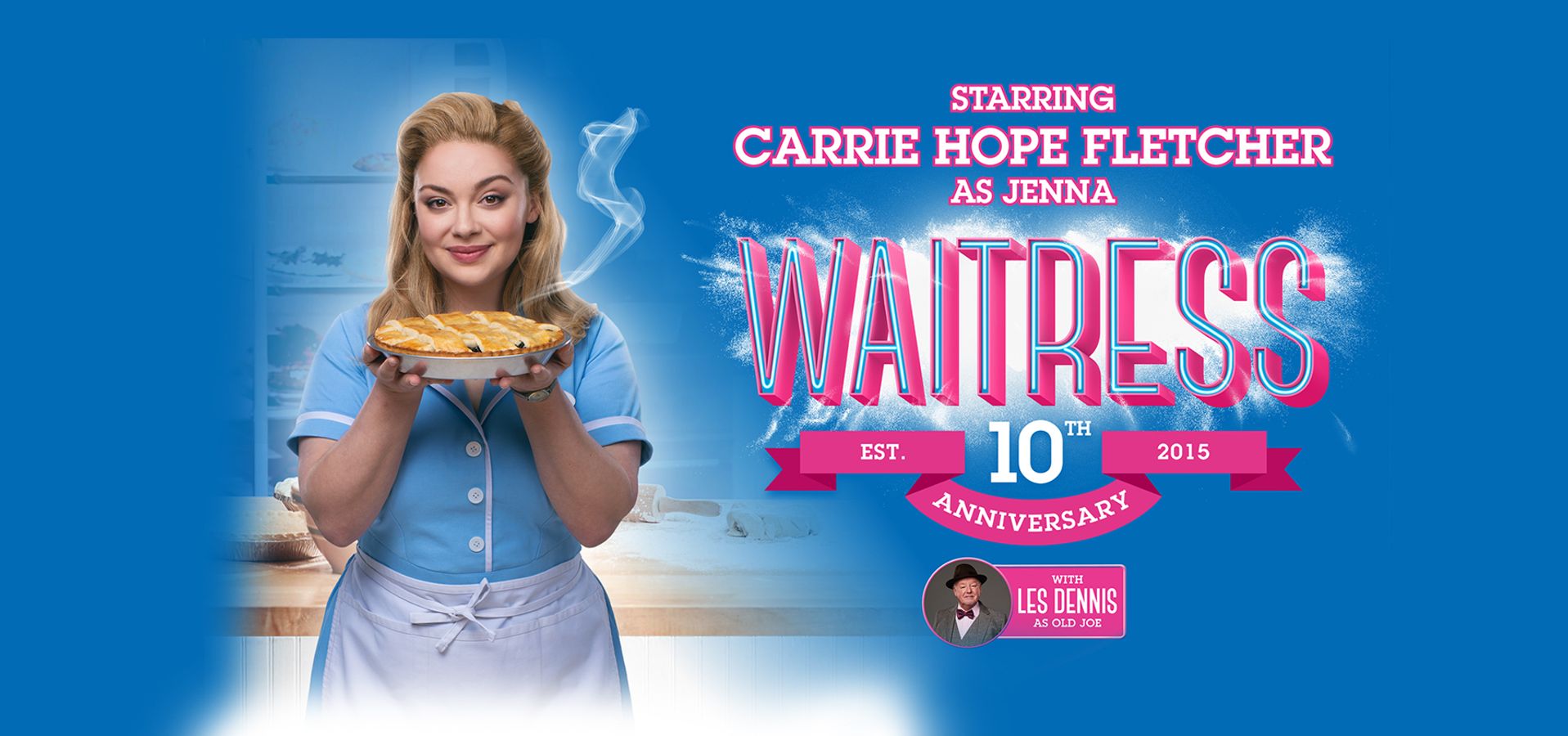
Ten years on from the musical’s original Broadway opening, Waitress has lost none of its bite. If anything, its mixture of warmth and darkness feels more striking now. This anniversary tour arrives at Nottingham’s Royal Concert Hall with an exceptional cast, led by Carrie Hope Fletcher as Jenna, and makes a convincing case for Waitress as something rather more substantial than the feel-good musical its advertising might suggest.
Jenna is a gifted pie-maker trapped in an unhappy marriage to Earl. Her creativity finds an outlet in the increasingly imaginative pies she invents, their names becoming a running commentary on whatever disaster is unfolding in her life. Then she discovers she is pregnant. It is emphatically not the news she wants.
That distinction matters. Waitress is unusually willing to let its central character have complicated feelings about pregnancy and motherhood without immediately correcting her. Jenna can be frightened, angry, selfish, funny and hopeful, sometimes within the same scene. The musical trusts its audience to live with those contradictions.
Carrie Hope Fletcher understands this beautifully.
Her Jenna is not played as a conventional musical-theatre heroine waiting for the big number in which everything suddenly makes sense. Fletcher keeps much of her performance contained, particularly in the scenes with Mark Willshire’s Earl. You can see Jenna constantly measuring the room and judging how much of herself it is safe to reveal. It makes the moments when that restraint finally breaks enormously powerful.
And, inevitably, there is the voice.
Bareilles’ score requires a performer who can make intimate singer-songwriter material work inside a large theatre without losing its vulnerability. Fletcher manages precisely that. Her performance of She Used to Be Mine is the evening’s emotional high point, but not simply because of its vocal power. The song works because of everything Fletcher has held back beforehand. When Jenna finally confronts the distance between the person she once imagined becoming and the person she now sees, the result is devastating.
Yet Waitress would be a much poorer musical if Jenna’s story existed in isolation. Its real strength lies in the friendship between Jenna, Becky and Dawn, and Sandra Marvin and Evelyn Hoskins make the trio enormously likeable.
Marvin’s Becky has formidable comic timing and a wonderfully dry ability to puncture the drama around her. There is also real warmth beneath the jokes, and her performance gives the friendship between the three women a sense of history rather than simply making them supporting characters assigned to cheer Jenna on.
Hoskins, meanwhile, is gloriously funny as Dawn. Her anxious, tightly wound search for romance could easily become caricature, but Hoskins finds genuine tenderness in her awkwardness. That becomes particularly effective when Mark Anderson arrives as Ogie.
Anderson attacks the role with such extraordinary commitment that the production briefly seems to operate according to an entirely different set of physical laws whenever he appears. Never Ever Getting Rid of Me is wonderfully ridiculous: part love song, part comic assault and performed with the sort of precision required to make apparent chaos work. His chemistry with Hoskins is delightful.
Dan Partridge brings a similarly effective nervous energy to Dr Pomatter. His scenes with Fletcher are deliberately awkward, impulsive and frequently very funny. Importantly, the production does not attempt to turn their affair into some grand romantic solution to Jenna’s problems. Pomatter is part of her escape, but he is not her rescue.
That is one of the smarter things about Jessie Nelson’s book. Waitress repeatedly presents the sort of ingredients from which a conventional romantic musical might be constructed and then refuses to bake the expected cake. Jenna’s eventual liberation has to belong to Jenna.
Mark Willshire faces perhaps the least enviable task of the evening as Earl. There can be no charming away his behaviour, and the production wisely does not try. Instead, Willshire gives us a man whose insecurity manifests itself through control. The atmosphere changes noticeably when he enters. Against the broader comedy elsewhere, those scenes land with uncomfortable force.
Les Dennis provides a very different presence as Joe. Initially appearing to be the familiar cantankerous older customer, Dennis gradually reveals the affection beneath the character’s bluntness. He resists overplaying the sentiment, which makes Joe’s significance to Jenna considerably more affecting when it becomes clear.
The score remains one of Waitress’ greatest assets. Bareilles brought pop songwriting instincts into musical theatre without sanding away what made her writing distinctive. Songs grow naturally from thoughts the characters seem unable to express in ordinary conversation, while recurring musical ideas give the score an intimacy that contrasts nicely with the production’s larger comic moments.
The band being integrated into the world of the show helps enormously. Rather than feeling like accompaniment arriving invisibly from somewhere beneath the stage, the musicians become part of the diner’s rhythm. The result is a production with a musical pulse running through it almost constantly.
Visually, the show is just as confident. The diner provides a bright, bustling centre while Jenna’s pies offer something more imaginative: food becomes a language through which she processes fear, desire and frustration. The choreography and ensemble movement keep the stage alive without overwhelming the smaller human story at its centre.
That balance between the theatrical and the intimate is crucial because Waitress makes some startling tonal turns. One moment can involve broad physical comedy; another can expose the realities of coercive control. There are occasions when the shift is deliberately uncomfortable, but that messiness is also part of the show’s appeal. These characters’ lives do not conveniently separate themselves into comic scenes and serious ones.
Most importantly, Waitress understands that Jenna’s story is not really about finding the right man.
It is about rediscovering agency.
For much of the evening Jenna imagines freedom as something that might arrive from outside: money, an affair, a baking competition, perhaps simply the possibility of running away. The musical’s most satisfying decision is to gradually dismantle that idea. Her eventual transformation comes when she begins making decisions for herself rather than arranging her life around the desires of other people.
That gives the sweetness of the ending some substance. It is hopeful without pretending that everything preceding it was easily fixed.
This 10th anniversary production has plenty for an audience simply looking for a hugely entertaining musical: an excellent score, big laughs, memorable characters and a central performance from Carrie Hope Fletcher that is worth the ticket price alone. But its staying power comes from the darker material beneath the brightly coloured surface.
Like one of Jenna’s more adventurous creations, Waitress combines ingredients that should perhaps clash: domestic abuse and slapstick, infidelity and romance, unwanted pregnancy and motherhood, loneliness and exuberant comedy.
Somehow, it works.
Warm, funny and occasionally heartbreaking, Waitress serves its comfort with enough bitterness to stop the whole thing becoming too sweet.
Waitress runs at the Royal Concert Hall, Nottingham until Saturday 15 August 2026.
Cast: Carrie Hope Fletcher (Jenna), Sandra Marvin (Becky), Evelyn Hoskins (Dawn), Les Dennis (Joe), Dan Partridge (Dr Pomatter), Mark Anderson (Ogie), Mark Willshire (Earl) and Dan O’Brien (Cal).