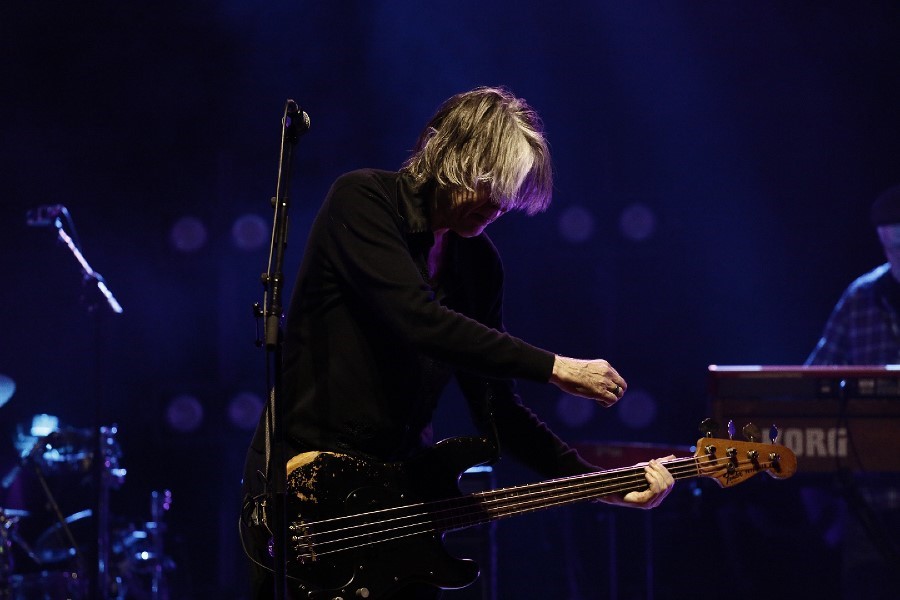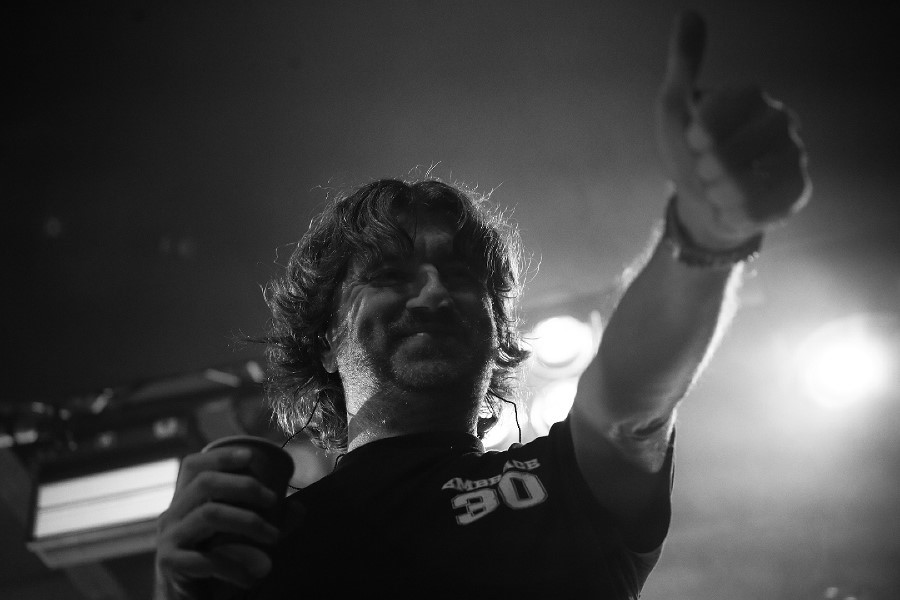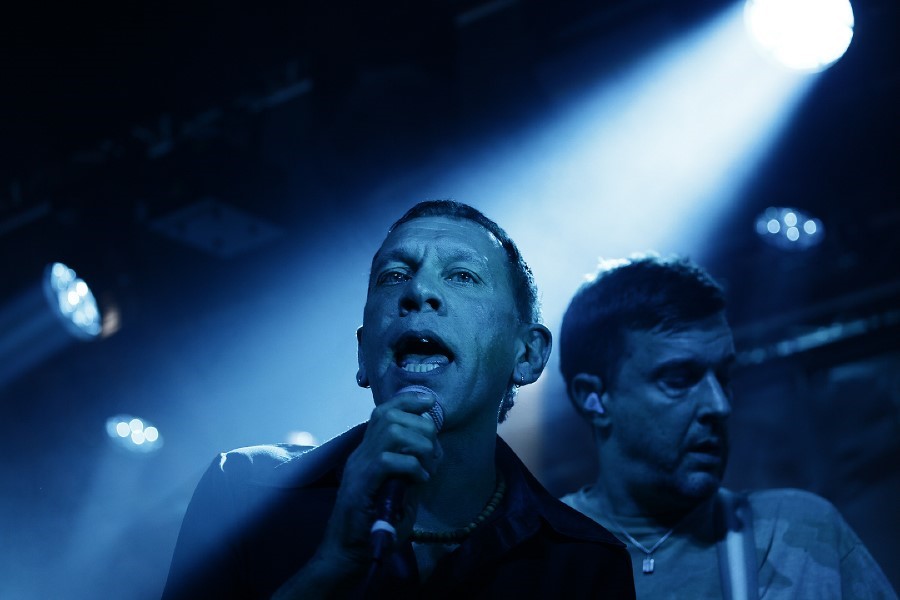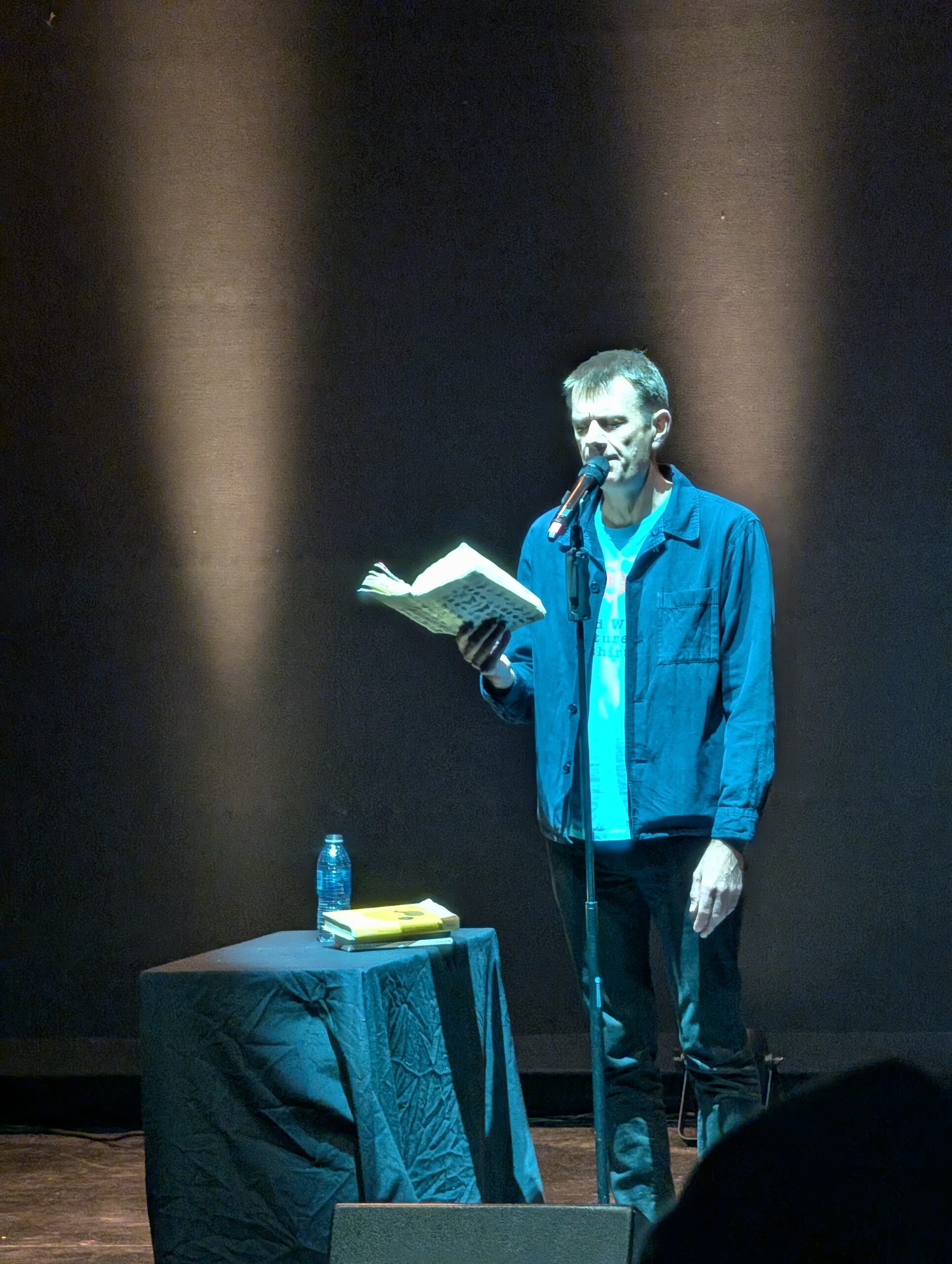
 There is something rather wonderful about a band that can take centuries-old songs about drinking, deception, doomed relationships and questionable maritime adventures and make them sound like the most exciting thing happening in contemporary British music. Bellowhead have been doing precisely that for two decades, and their return to Nottingham’s Royal Concert Hall to celebrate the twentieth anniversary of Burlesque was a reminder of just how extraordinary their contribution to folk music has been.
Opening proceedings was the superb Seckou Keita, whose mastery of the kora, a traditional West African stringed instrument, offered a fascinating contrast to the musical exuberance of the evening’s headliners. There is an almost hypnotic quality to Keita’s playing, his intricate melodies possessing both remarkable technical complexity and an effortless accessibility. There was something particularly fitting about his inclusion on the bill. Both Keita and Bellowhead understand that traditional music is a living, evolving art form rather than something to be preserved behind glass.
When Bellowhead released Burlesque in 2006, they challenged almost every preconceived notion of what an English folk band could be. Here were eleven musicians drawing upon folk, jazz, brass band music, music hall, cabaret and classical influences, frequently within the confines of a single song. Twenty years on, the sheer audacity of those arrangements remains remarkable.
The magnificently irreverent Rigs of the Time encapsulates much of what makes Bellowhead so compelling. Beneath the infectious melody and theatrical delivery lies a biting commentary on greed, dishonesty and profiteering. That a traditional song can still feel so politically and socially pertinent is perhaps less a testament to the timelessness of human nature than a rather depressing indictment of our collective inability to learn from it.
Jon Boden remains a wonderfully charismatic frontman, possessing the expressive range to inhabit everything from the swaggering confidence of a drunken sailor to the vulnerability of a tragic ballad. His delivery is frequently theatrical without becoming pantomime, allowing the humour, darkness and humanity of these stories to emerge naturally.
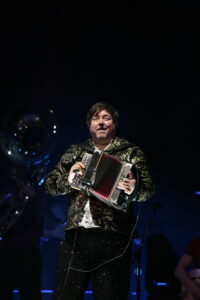
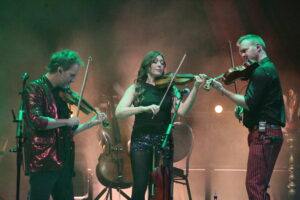
Yet Bellowhead’s brilliance has always been fundamentally collective. Watching eleven musicians navigate arrangements of such extraordinary complexity is a pleasure in itself. Brass erupts through the fiddles, percussion drives the melodies into unexpected territory, and John Spiers’ melodeon provides a distinctly English folk character amid the glorious musical eccentricity.
 What is particularly impressive is how rarely the arrangements feel overcrowded. For all the considerable noise that Bellowhead are capable of generating, there is an extraordinary understanding of musical space. Individual instruments emerge, disappear and reappear, each contributing something distinctive to the character of a song. The apparent chaos conceals an immense amount of discipline.
The darker storytelling of The Outlandish Knight demonstrates another dimension of the band’s considerable talents. English traditional music is frequently a far more disturbing place than its twee reputation might suggest, populated by murderers, adulterers, opportunists and people whose decision-making abilities leave much to be desired. Bellowhead relish these peculiarities, bringing out the drama without sacrificing the integrity of the stories.
The beauty of celebrating Burlesque is that it allows some of the band’s earlier material to reclaim the spotlight from the enormous popularity of their subsequent releases. Across the Line, Fire Marengo and Flash Company demonstrate just how fully formed Bellowhead’s musical identity was on that debut album. There is little sense of a band tentatively discovering its sound; the imagination, ambition and wonderfully unorthodox approach to arrangement were already firmly established.
Of course, an evening with Bellowhead would scarcely feel complete without excursions into the wider catalogue. The glorious rhythmic invention of Haul Away, the infectious character of Roll Alabama and the wonderfully eccentric Rosemary Lane illustrate the sheer breadth of musical influences that the band have absorbed over the years.
And then there are the irresistible communal anthems. London Town, New York Girls and Roll the Woodpile Down possess the sort of infectious energy that makes the presence of seating in a concert hall seem like a fundamental architectural oversight.
The instrumental exuberance of Frog’s Legs and Dragon’s Teeth is equally joyous. There is something immensely satisfying about hearing traditional dance tunes delivered with the force and swagger of a rock band, the sophistication of a jazz ensemble and the barely contained enthusiasm of a village festival that has got spectacularly out of hand.
 What makes Bellowhead particularly important, however, extends beyond their considerable entertainment value.
Folk music has always depended upon reinvention. Songs have travelled between communities, across oceans and through generations, acquiring new meanings, melodies and interpretations along the way. Bellowhead understand that respecting a tradition does not require treating it with excessive reverence. Sometimes the greatest compliment you can pay a centuries-old song is to give it an enormous brass section and see what happens.
Their continued popularity also challenges the assumption that sophisticated music must somehow be inaccessible. These are exceptionally accomplished musicians performing arrangements of considerable complexity, yet the overriding experience is one of uncomplicated enjoyment. You could spend an entire evening dissecting the musicianship or simply abandon yourself to the music. Both approaches are equally rewarding.
Twenty years after Burlesque, Bellowhead remain one of the most inventive, distinctive and gloriously entertaining bands British music has produced this century. Their retirement in 2016 increasingly feels like one of the more fortunate examples of a band failing to keep its word.
Long may their retirement continue to be unsuccessful.