Rock City, Nottingham | 19 November 2026
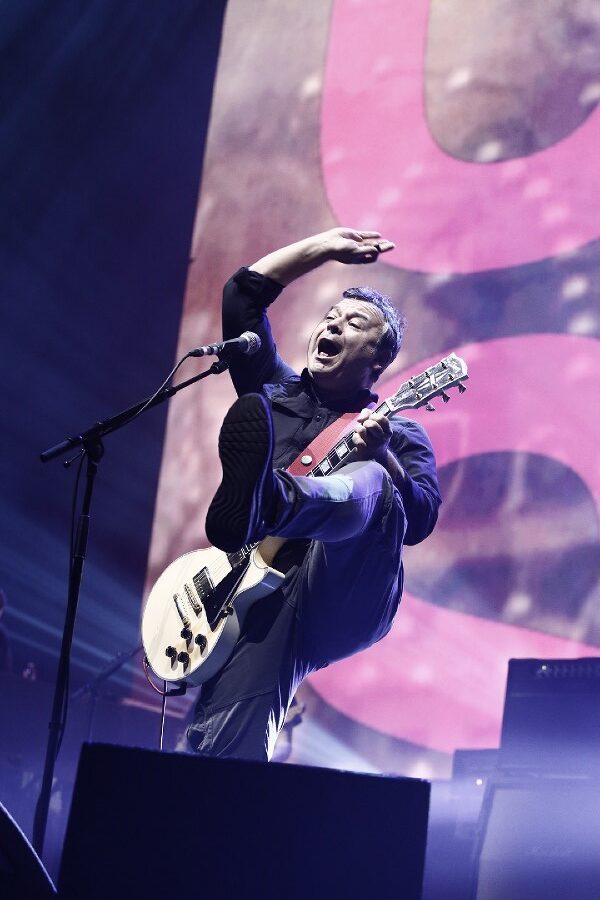
There is something rather wonderful about the fact that, nearly four decades into their career, Levellers remain as gloriously incompatible with the establishment as they were when they first emerged from Brighton. In an industry increasingly concerned with algorithms, corporate sponsorship and carefully managed public personas, here is a band whose enduring appeal owes much to their apparent inability to give a damn about any of it.
And thank goodness for that.
Thursday night at Nottingham’s Rock City was a celebration of everything that makes live music indispensable: community, rebellion, escapism, political conviction and the somewhat questionable dancing abilities of people whose knees really ought to know better by now.
 Opening proceedings were The Meffs, the Essex punk duo who make a frankly unreasonable amount of noise for just two people. Lily Hopkins and Lewis Copsey possess the sort of chemistry that allows them to dispense with anything remotely unnecessary. Guitar, drums, attitude and something worth shouting about. What more do you need?
Business, Deathwish and Disorder established their credentials early, with the relentless Fight and Law maintaining the momentum. There is a wonderful directness to The Meffs, whose songs arrive without unnecessary decoration or diplomatic consideration. They are angry, intelligent and frequently very funny, recognising that righteous indignation and a sense of humour are perfectly compatible bedfellows.
Nightmare, Modern and Breathe continued the assault before Gravity and Clowns rounded off a superb opening set. There is considerable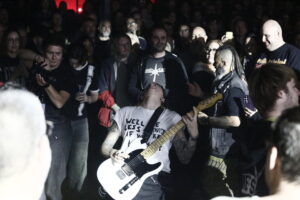 substance beneath the abrasive exterior, with songs that manage to be both confrontational and remarkably infectious.
The Meffs represent precisely the sort of band that British punk needs. They understand its history without treating it as a museum exhibit, and their frustrations belong unmistakably to the present. Anyone concerned about the future of politically engaged guitar music would be well advised to spend half an hour in their company.
Then came Levellers.
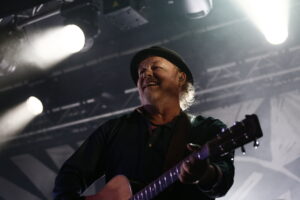 Opening with One Way is an extraordinarily confident statement of intent. Most bands would keep a song of such significance tucked away for the encore, but Levellers have the considerable luxury of a catalogue sufficiently rich to throw one of their defining anthems into the opening minutes.
The occasion was a celebration of Levelling the Land, an album released in 1991 that has aged remarkably well, largely because successive governments have been extraordinarily considerate in ensuring that its subject matter remains relevant.
Very few bands can claim to have produced an album where almost everyone in the room seems to know every word to every song. Not just the singles, not just the obvious anthems, but the album tracks too. At Rock City, the distinction between hit single and album track seemed almost entirely redundant. It was a remarkable testament to just how iconic Levelling the Land has become. Thirty-five years after its release, this is an album that people have not simply listened to but lived with. For many, its songs have become the soundtrack to entire chapters of their lives. There are platinum-selling artists who would give their right arm for that sort of connection with an audience.
The Game and Fifteen Years retain their restless energy, whilst The Boatman offers that irresistible combination of romantic escapism and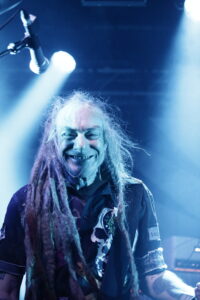 folk instrumentation that distinguishes Levellers from so many of their contemporaries.
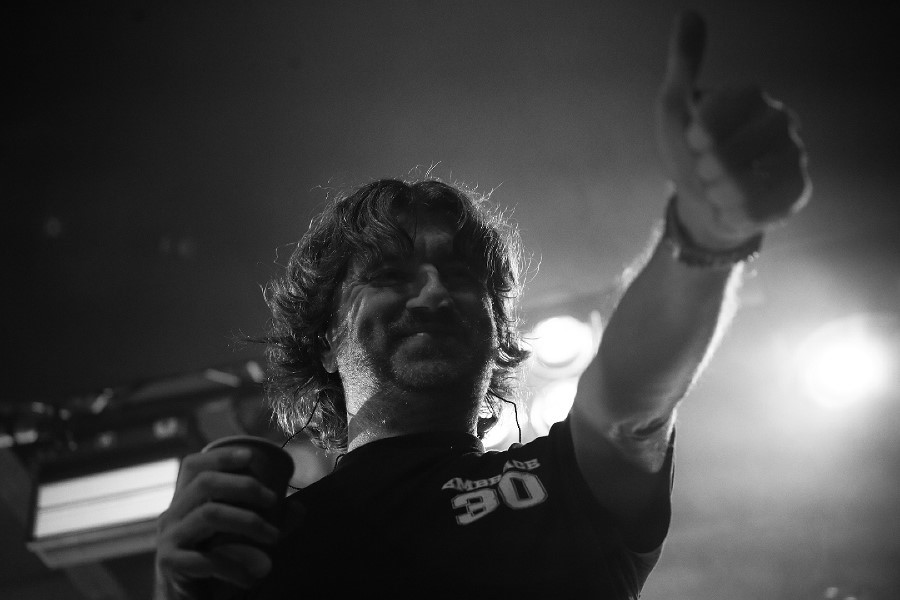
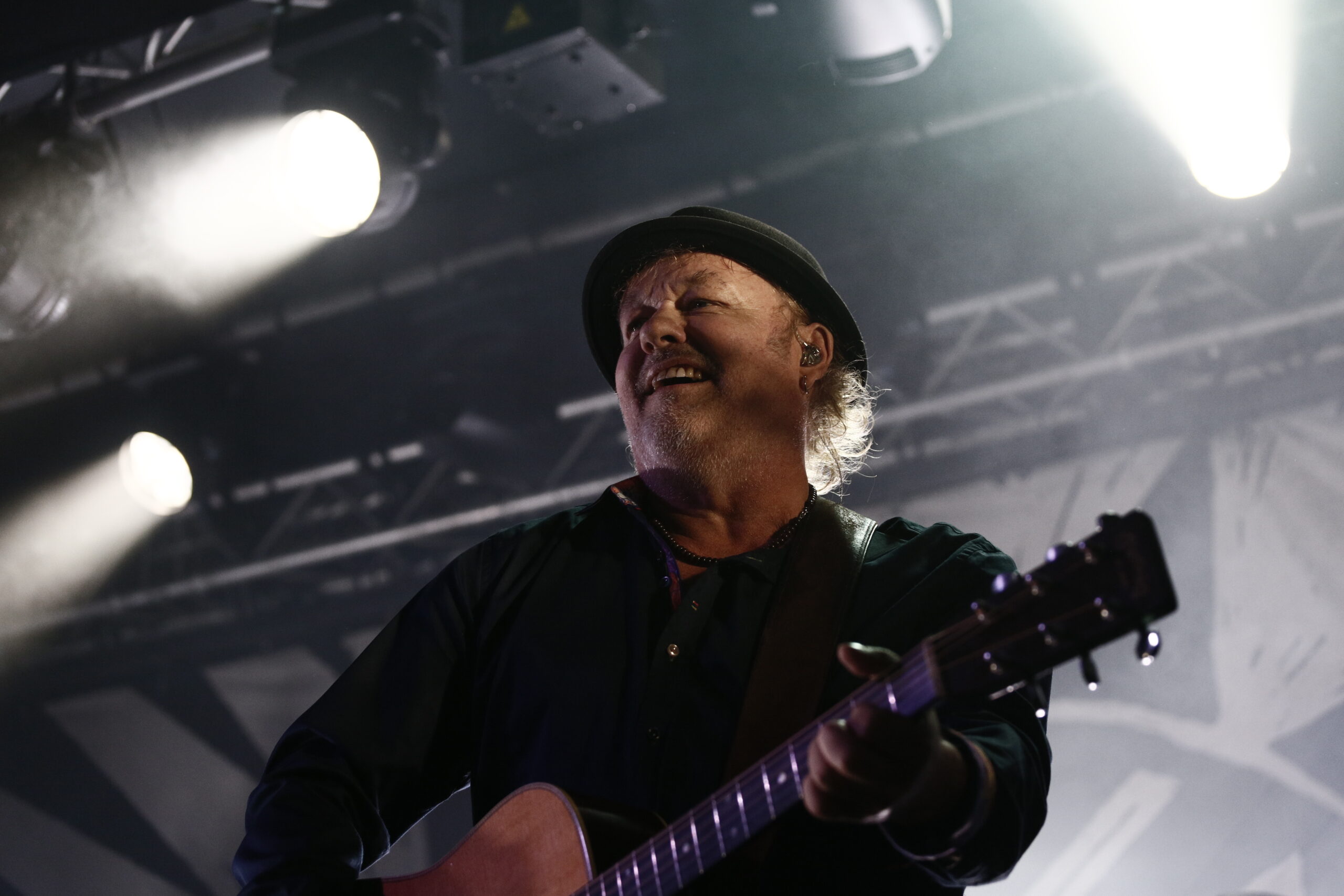
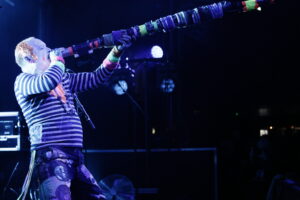
The Jig provided one of the evening’s great visual and musical spectacles, with Stephen Boakes and his didgeridoo taking centre stage. There is something magnificently unconventional about a British folk-punk band incorporating an Aboriginal Australian instrument into proceedings and making it feel like the most natural thing in the world.
Boakes is a wonderfully theatrical presence, and the deep, hypnotic resonance of the didgeridoo, combined with the frantic fiddle and driving percussion, created an extraordinary collision of musical traditions. It was gloriously eccentric, utterly exhilarating and quintessentially Levellers. In an age when so much popular music seems determined to sound like everything else, moments such as this are worth their weight in gold.
Liberty, Far From Home and Sell Out followed, each demonstrating how effectively Levellers married the storytelling traditions of folk music with the urgency and defiance of punk. Their genius has always been making politically articulate songs that people want to dance to. Plenty of musicians can articulate what is wrong with the world; considerably fewer can make doing so feel like a particularly excellent night out.
 Then there was Another Man’s Cause.
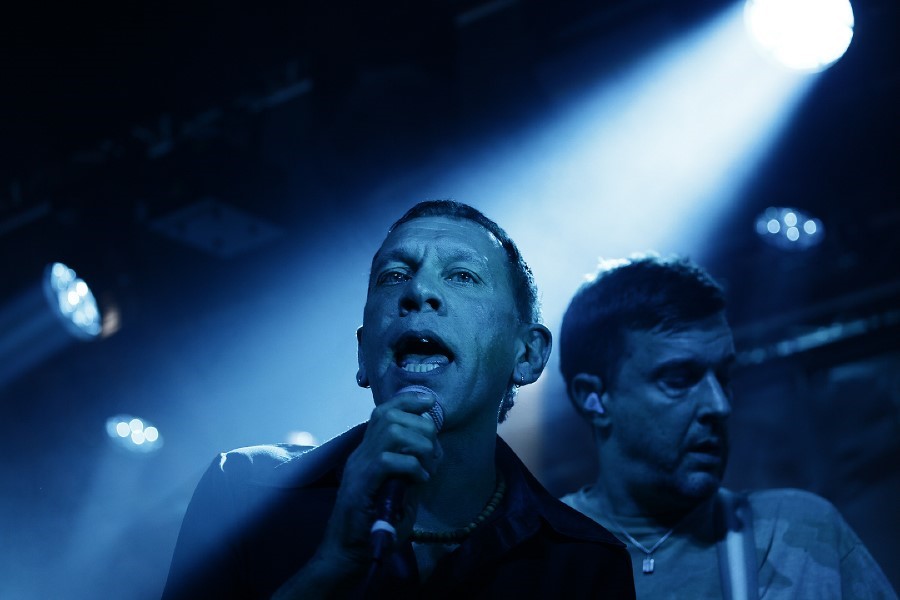
For all the exuberance that surrounds Levellers, their capacity for tenderness is sometimes overlooked. The song’s devastating exploration of the human cost of warfare remains painfully pertinent, and its emotional power has diminished little with the passing of time. Mark Chadwick’s voice carries the compassion necessary to make the song work without descending into sentimentality.
The Road and The Riverflow returned proceedings to more celebratory territory before Battle of the Beanfield brought the album section to its conclusion. Forty-one years after the events that inspired it, the latter remains a furious examination of state power and the treatment of alternative communities.
What is particularly striking about Levelling the Land is how little it sounds like a historical curiosity. Its concerns about freedom, inequality, political accountability and the right to live differently remain depressingly familiar. Britain may have acquired considerably faster internet since 1991, but progress elsewhere has been somewhat less impressive.
With the album section dispatched, Levellers had an embarrassment of riches from which to construct the remainder of the evening.
 Julie remains one of their finest pieces of songwriting, a beautifully constructed portrait of hardship and lost opportunity. Hope Street similarly demonstrates their ability to find humanity within social commentary, populating their songs with recognisable people rather than abstract political arguments.
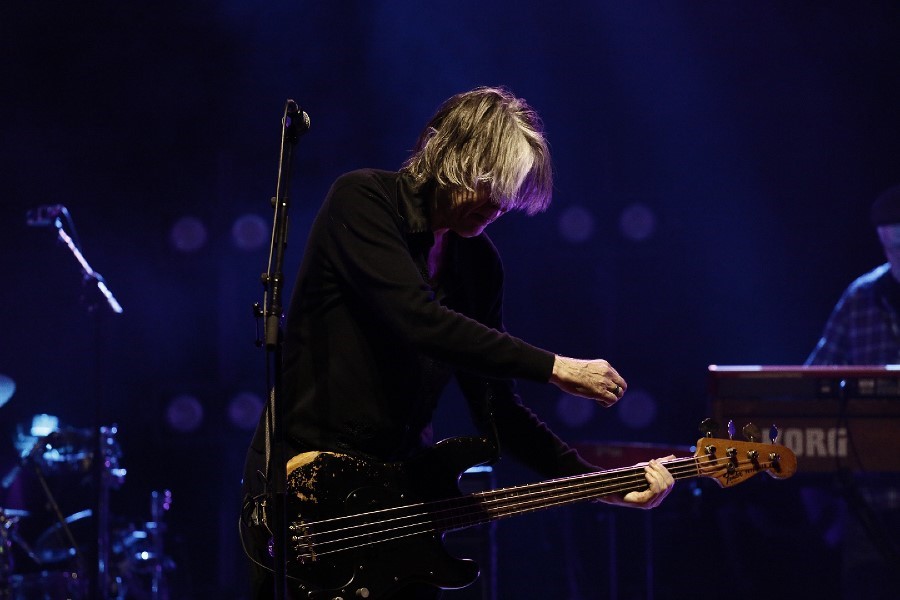
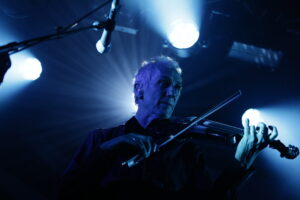
Freak Show, Carry Me and Davey served as reminders of just how much depth exists within their catalogue, whilst The Cholera Well delivered another invigorating dose of folk-punk ferocity. Jonathan Sevink’s fiddle remains one of the most joyously distinctive sounds in British alternative music, particularly when coupled with Jeremy Cunningham’s propulsive bass and the sheer muscularity of the band’s rhythm section.
The encore, however, produced perhaps the evening’s most inspired surprise, with The Meffs returning to the stage for a spectacular reinvention of This Garden.
Far from being a token guest appearance, the collaboration transformed the song into an entirely different beast. The raw, confrontational punk energy of The Meffs collided magnificently with Levellers’ expansive folk-rock sound, creating something considerably more ferocious than the original. It was an absolutely electrifying rendition, the sort of unexpected musical experiment that works so ridiculously well that one immediately wants a recorded version.
There was something particularly satisfying about watching two generations of politically conscious alternative musicians finding such obvious common ground. Here was a band approaching its fourth decade actively reinventing its own material alongside younger musicians rather than simply reproducing past glories.
It was an inspired collaboration and one of the finest moments of an already exceptional evening.
More of this, please.
The Devil Went Down to Georgia subsequently offered another opportunity for Sevink to demonstrate why his fiddle should probably be classified as an offensive weapon, before Beautiful Day brought proceedings to a gloriously uplifting conclusion.
Few songs offer such an effective antidote to the general misery of modern existence. Its exuberance is infectious, its chorus practically irresistible and its ability to make the outside world seem temporarily less ridiculous is worth the price of admission alone.
For all the evening’s righteous anger, social commentary and political frustration, it ended with an overwhelming sense of joy. That apparent contradiction has always been central to the magic of Levellers. They understand perfectly well how infuriating the world can be, but they refuse to let it rob them of the pleasure of being alive.
There is a temptation to describe Levellers concerts as nostalgic experiences, but that rather misses the point. Nostalgia implies a longing for something that no longer exists. The sense of community that Levellers foster, the values they articulate and the sheer pleasure of their music are all very much alive.
Paired with The Meffs, the evening offered a heartening demonstration that the rebellious spirit of British alternative music is in excellent health. Different generations, different sounds, but a shared conviction that music ought to have something to say and that standing quietly by is rarely the most interesting option.
Levellers remain passionate, provocative, musically exhilarating and tremendous company. The Meffs, meanwhile, deserve every opportunity to wreak similar havoc upon considerably larger audiences.
If this is growing old disgracefully, long may it continue.
An absolutely magnificent evening.