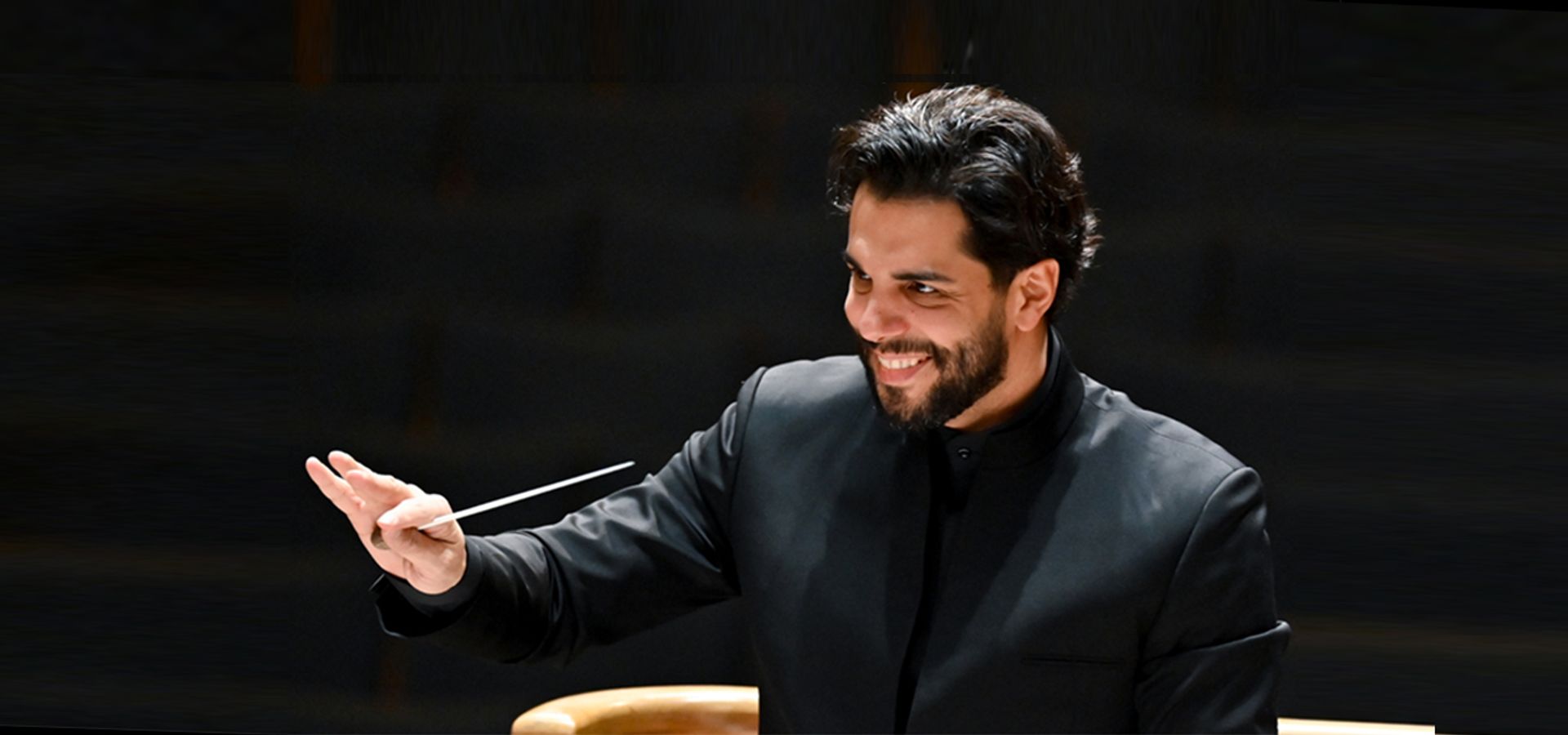
There are nights when classical music feels less like something being performed and more like something being released into the room. Last night at Nottingham’s Royal Concert Hall, the Royal Liverpool Philharmonic Orchestra gave one of those performances. Under Domingo Hindoyan, this was a concert of colour, force and emotional sweep, built around Russian music at its most vivid and dramatic.
Rimsky Korsakov’s Russian Easter Festival Overture opened the evening with a real sense of theatre. The orchestra did not simply play its bright, ceremonial colours. They let them bloom. The strings had a glowing warmth, the brass carried a clean, ringing confidence, and Hindoyan shaped the piece with a fine instinct for movement. It had grandeur without ever becoming heavy, and by the time the overture reached its final surge, the hall already felt fully awake.
The centrepiece was Prokofiev’s Piano Concerto No. 2, with Alim Beisembayev as soloist. It is a brutal, dazzling, often unforgiving work, but Beisembayev made its difficulties feel not easy exactly, but purposeful. His playing had extraordinary control, especially in the huge first movement cadenza, where the music seems to teeter between architecture and collapse. What impressed most was not only the speed or power, though there was plenty of both, but the clarity. Even at its most ferocious, his playing had shape, thought and direction. The orchestra matched him superbly, never treating the concerto as mere accompaniment, but as a volatile conversation between soloist and ensemble.
After the interval came Tchaikovsky’s Fifth Symphony, and this was where the evening moved from impressive to genuinely stirring. Hindoyan drew a performance full of tension, lyricism and release. The famous horn theme in the second movement was beautifully placed, tender without being overplayed, while the waltz had elegance and lift rather than sentimental gloss. The finale, when it came, had real weight. Tchaikovsky’s idea of fate can sometimes feel overblown in less careful hands, but here it felt earned. The orchestra allowed the music to build with patience, then opened it out into something thrilling.
What stood out across the night was the balance between precision and feeling. The Royal Liverpool Philharmonic Orchestra played with polish, certainly, but never with coldness. There was personality in the phrasing, bite in the rhythms, and a shared sense of commitment that travelled clearly from stage to audience. Hindoyan’s conducting was energetic but never showy. He seemed to trust the players, and they repaid that trust with playing of real depth and confidence.
Nottingham audiences have had some outstanding orchestral evenings this season, but last night deserves to sit very high among them. This was a programme with drama in its bones, performed by an orchestra in commanding form and led by a conductor who knows how to make large scale music feel alive in the moment.
By the end, the applause felt less like politeness and more like recognition. The Royal Liverpool Philharmonic Orchestra had not just visited Nottingham. They had filled the Royal Concert Hall with colour, danger, beauty and fire.