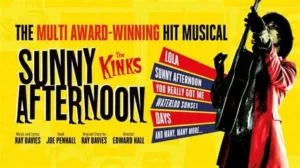
 Earlier this week in Nottingham, Sunny Afternoon proved why it remains one of the strongest British jukebox musicals of the last decade. Built around the music of The Kinks, it is far more than a greatest hits parade. This is sharp, funny, and at times unexpectedly moving theatre.
From the opening moments, the show captures the restless energy of post-war Britain and the sense of a country on the brink of cultural change. The storytelling charts the band’s rise with warmth and wit, while never glossing over the tensions and pressures that fame brings. There is an honesty here that gives the piece real substance.
Central to that emotional core is the relationship between Ray Davies and his brother Dave. The chemistry between the two performers is electric. They spark off each other in moments of humour, bristle in scenes of creative disagreement, and share a believable undercurrent of brotherly loyalty that anchors the entire narrative. Their clashes feel raw rather than theatrical, and their reconciliations carry genuine weight. It is this push and pull that gives the production much of its dramatic bite.
Musically, the show is exhilarating. Songs such as You Really Got Me and Waterloo Sunset feel earned rather than inserted for applause. They grow organically from the story, often reflecting the internal struggles playing out between the brothers and within the band itself. The sound is punchy and authentic, capturing the grit and edge that set The Kinks apart.
The portrayal of Ray Davies is particularly compelling. He is shown not simply as a frontman, but as a thoughtful, conflicted artist trying to navigate success without losing himself. Opposite him, Dave is vibrant and impulsive, providing both contrast and emotional charge. Together, their dynamic becomes the heartbeat of the show.
Visually, the production is smart and fluid, with period detail used effectively to evoke the era without overwhelming it. Scene transitions are slick, keeping the momentum strong while allowing space for quieter, reflective moments.
What makes Sunny Afternoon so rewarding is its balance. It celebrates creativity and individuality, but it also recognises the fragility of relationships under strain. The Nottingham audience responded with clear affection, rising to the energy of the final numbers while remaining absorbed throughout.
This was an uplifting and intelligently crafted evening of theatre: nostalgic without being sentimental, energetic without being hollow, and grounded in the powerful, complicated bond between two brothers who helped shape British music history.