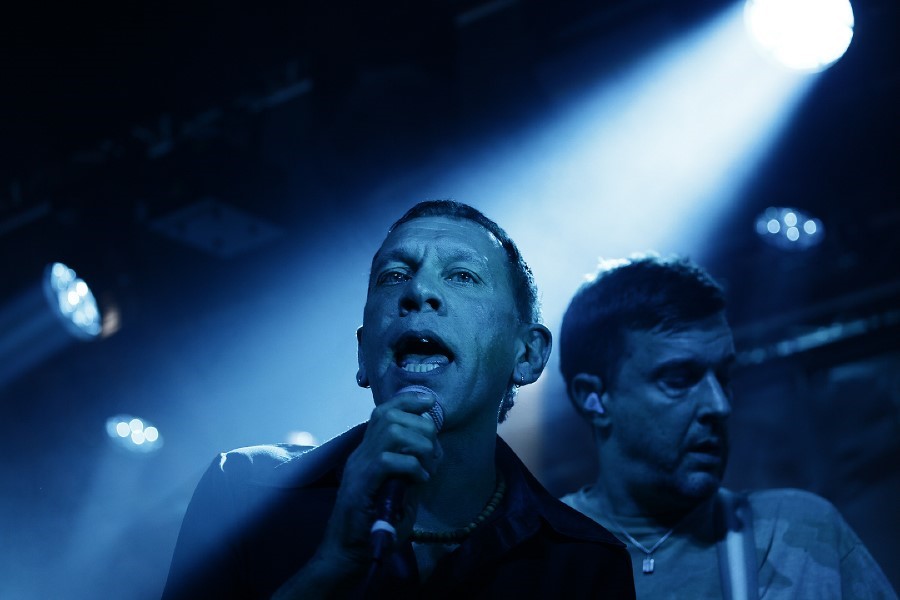

There has never been anything particularly fashionable about emotional restraint in the world of Embrace. This is a band that approaches matters of the heart with the subtlety of a cathedral organ falling down a flight of stairs, and British indie music is considerably richer for it.
Sunday night at Nottingham’s Rock City offered a celebration of three decades of gloriously uninhibited songwriting, though the evening began with two bands considerably closer to the beginning of their own musical adventures.
The Bunny Suit make a compelling argument for abandoning the traditional pre-headliner visit to the pub. Their seven-song set, opening with ‘Nightingale’ and ‘Bachmann’s Rage’, brings together angular alternative rock and infectious melodic sensibilities. ‘Right on Time’, ‘Get Better’ and ‘Jenny, I’m a Mess’ demonstrate an encouraging breadth of songwriting, while ‘No Sleep’ and ‘Can’t Stay’ round off an enjoyable introduction. There’s an appealing rawness to their musical identity, the sort of character that can so easily disappear when bands become overly concerned with polishing their sound for commercial consumption.

The Rolling People arrive armed with the sort of swagger that suggests nobody has informed them they’re supposed to be the support act. The Stockport outfit possess echoes of early Verve and the muscular confidence of Oasis, but there is enough personality in their songwriting to make such comparisons feel more like reference points than definitions.
‘State of Things’ and ‘Tell Them Again’ establish their credentials, while ‘A Crack in the Glass’ and ‘Never Wanted It to Happen’ demonstrate the ambition underpinning their sound. By the time ‘Coming Down’ and ‘Your Take’ complete their six-song set, they’ve made a persuasive case for considerably more attention. Anyone lamenting the supposed demise of British guitar music should probably spend less time complaining and more time investigating The Rolling People.
Embrace, meanwhile, have never been particularly interested in doing things by halves. Opening with ‘One Big Family’ and ‘All You Good Good People’ is a wonderfully extravagant use of two of the defining singles of their early career. Both serve as reminders of the muscular urgency that characterised the band’s arrival in the late nineties, something occasionally overlooked amid their reputation for sweeping ballads.
 Richard McNamara’s guitar work remains fundamental to that sound, providing the necessary grit beneath the grand melodic gestures. Danny McNamara’s distinctive vocal delivery, meanwhile, possesses an emotional sincerity that no amount of technical perfection could adequately replicate.
The remarkable thing about Embrace’s catalogue is how comfortably its different eras coexist. ‘Road to Nowhere’ sits alongside songs written decades earlier without sounding like an obligatory concession to new material. ‘Nature’s Law’ remains an astonishingly effective exercise in musical pacing, gradually expanding into the sort of enormous chorus for which Rock City might as well have been purpose-built.
There is considerable pleasure in hearing ‘Stop’ and the criminally underrated ‘A Glorious Day’, the latter a reminder of just how much excellent material surrounds the more celebrated singles on Out of Nothing. That album represented one of British indie music’s more remarkable career resurrections, returning Embrace to mainstream prominence when many had prematurely written them off.
Yet reducing Embrace to their initial success and subsequent comeback does a considerable disservice to everything they’ve produced since. The darker atmosphere of ‘Refugees’ and the contemporary sensibilities of ‘We Are It’ illustrate a band that has continued to evolve without sacrificing the qualities that made people fall in love with them in the first place.
Then there’s ‘Save Me’, a gloriously spirited reminder that Embrace are perfectly capable of making music to move your feet as well as rearrange your emotional wellbeing. The wonderful Drawn from Memory remains an album deserving of considerably more affection than it generally receives.
‘Get Out of My Own Way’ and ‘Exploding Machines’ further reinforce the point that this is a functioning creative outfit rather than a heritage act dutifully wheeling out the hits.
Although, when those hits are quite this good, one can hardly complain about their appearance.
‘Gravity’ may have originated with Chris Martin, but Embrace have long since made it unmistakably their own. Its tenderness remains beautifully affecting, particularly when followed by the magnificent ‘Ashes’, a song whose sense of defiance gives its enormous chorus genuine emotional weight. It remains one of the finest comeback singles of its generation.
The generosity of the five-song encore borders on the ridiculous. Plenty of bands would happily build an entire career around the material Embrace have left until this late in the evening.
‘Fireworks’ is devastatingly beautiful, its fragility providing a welcome contrast to the grander arrangements elsewhere in the set. ‘Emily’ offers another opportunity to appreciate the band’s later songwriting before ‘Come Back to What You Know’ and ‘My Weakness Is None of Your Business’ revisit the peculiar mixture of vulnerability, longing and determination that made their debut album such an enduring proposition.
And then comes ‘The Good Will Out’.
There are songs that acquire a significance far beyond the circumstances in which they were written, and this is undoubtedly one of them. Its magnificent closing refrain scarcely requires words to communicate what the music has already made abundantly clear.
Embrace have occasionally suffered at the hands of critics who mistake emotional sincerity for a lack of sophistication. There has always been something rather tedious about the notion that music must maintain a certain ironic distance to be considered intelligent. The ability to articulate complicated feelings in a manner that thousands of people can immediately recognise and share is a considerably greater songwriting achievement than some would care to acknowledge.
For those who have grown older alongside Embrace, these songs inevitably carry the weight of almost thirty years of personal history. Relationships, friendships, ambitions, disappointments and all the assorted complications of adulthood have accumulated since The Good Will Out first appeared. Songs that meant everything at eighteen can mean something entirely different, and perhaps even more profound, at forty-five.
That’s the enduring beauty of Embrace. Their music grows older with you without ever losing its youthful conviction that feelings matter enormously.
With The Bunny Suit and The Rolling People providing ample evidence that British guitar music remains in capable young hands, Sunday night at Rock City was a celebration of considerably more than nostalgia.
Thirty years of Embrace, and still absolutely no danger of anyone accusing them of emotional understatement.
Thank goodness for that.